Hi.
OpenArt is an independent curatorial art media platform. Publisher of [soft] artist interview magazine.

OpenArt is an independent curatorial art media platform. Publisher of [soft] artist interview magazine.
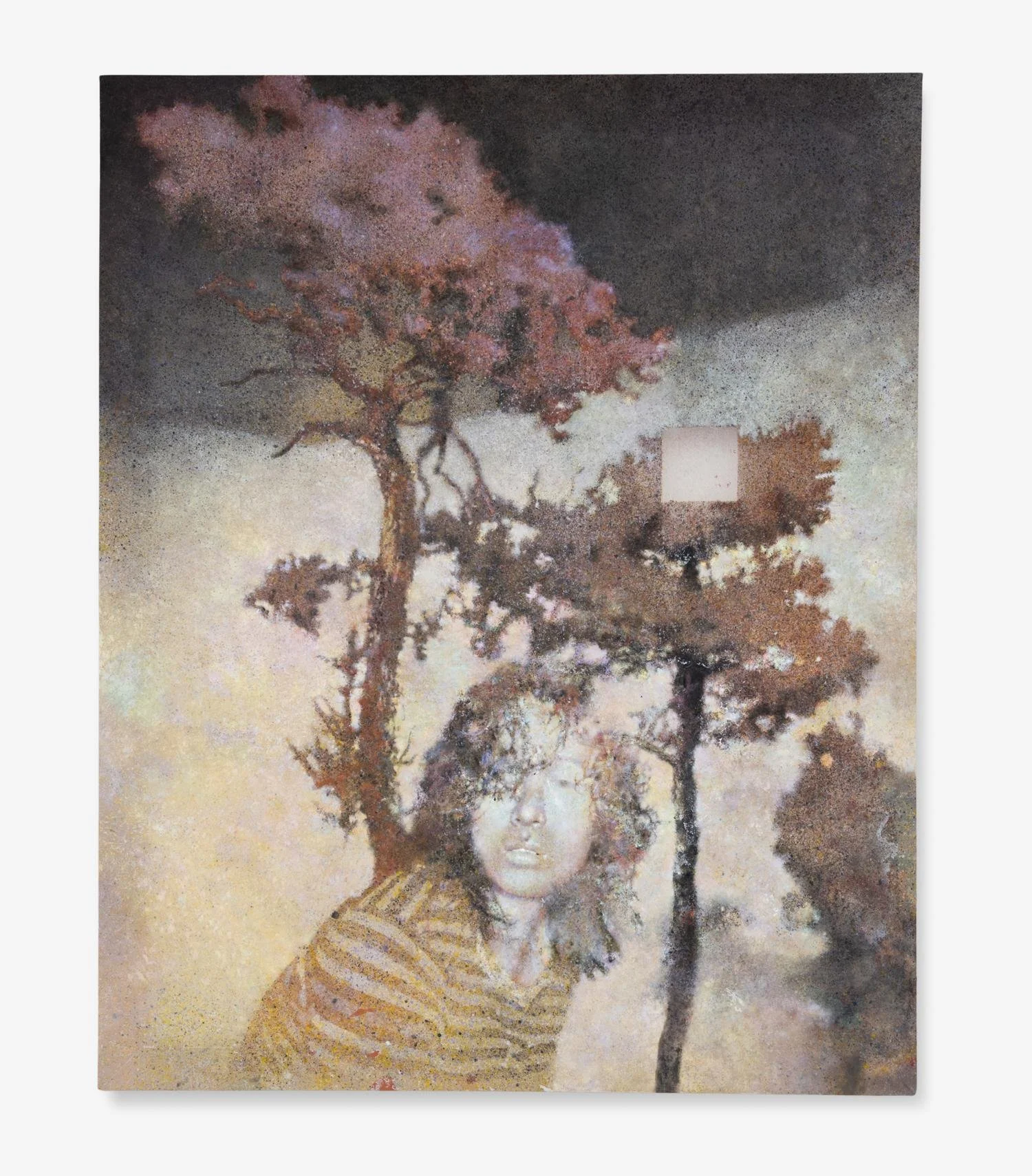
Embedded Landscape, The Witness
Acrylic on silk
161.5 x 130 cm
2026
Name: Reeha Lim
City: Seoul
Website: https://reeha.art/
Q: Your life has involved constantly moving between different cultural environments, from one to another, again and again. What has that constant state of transition been like for you?
I was born in Seoul. When I was five, my whole family moved to Shenyang, China, where I went through elementary, middle, and high school. I did half a year of college there, then moved back to Korea, then to Europe, then back to Korea again, then to the U.S. Now I’m back in Korea, so I’ve just been going back and forth like that.
When we first moved to Shenyang, I mostly lived with my mom. My dad was going back and forth between places, so she was the person I spent the most time with. I didn’t really have friends then, and I couldn’t speak Chinese, so I started painting all the time as a way to communicate with people.
So, going back to what we were just talking about, that idea that an artist’s motivation should come from deep within, and how you view your own position within the system, those are two things I really related to. Ever since I was a kid, painting, I’ve always been curious about myself and curious about the world. I was very self-motivated, and no matter what anyone else thought, I just kept painting.
Later, after I went to the U.S., that idea changed a lot. Back in China, people always saw me as Korean. They didn’t think of me as Chinese or as one of them, even though I speak Chinese like a native, I speak it really well, and I went to local schools. When I first started school, the teacher would always call me out and introduce me to the class as a foreigner, so I got special treatment. I didn’t have to do homework or military training, that kind of thing, even though I did it all anyway. But they still saw me as a foreigner. Especially in history class, whenever something sensitive came up involving Korea, China, or Japan, everyone’s heads would turn to look at me. Growing up, it was always like that. No matter how hard I tried, if I wasn’t born there, people still had certain expectations of me, or their own prejudices.
But you said before that you appreciate being an outsider, being a stranger or not quite one of them. I completely relate to that because I appreciate it too. I think it’s one of the ways you start to see the differences between cultures and countries. A lot of my subject matter comes out of that appreciation: why every culture has different architecture, why some doors open this way and others open that way.
Later, when I went back to Korea, they didn’t treat me as fully Korean either. They still saw me as a foreigner, or half Chinese, something like that. So this has already become a core part of my identity. I don’t find it uncomfortable or feel like I have to do something about it. I’ve already accepted it.
Q: You weren’t uncomfortable with yourself. You felt like this is who you are, and if anything, it made you more unique. So when you said that after you went to the U.S. your way of thinking changed, what happened there? I’m guessing the change wasn’t that your identity itself changed.
It was more that my thinking about art shifted a little. Before, I was always in school, always an art student, so I never thought about selling paintings or imagined being a professional artist. When I was studying traditional Chinese painting at the Central Academy of Fine Arts (CAFA) in Beijing, I saw a lot of people become commission artists. Then I went back to Korea for college, and I never met anyone who said they could sell paintings, so it never felt like part of the conversation. I just made what I wanted to make and never thought there would be a collector base that resonated with this kind of art. But the moment I got to the U.S., galleries, clients, and collectors all started approaching me.
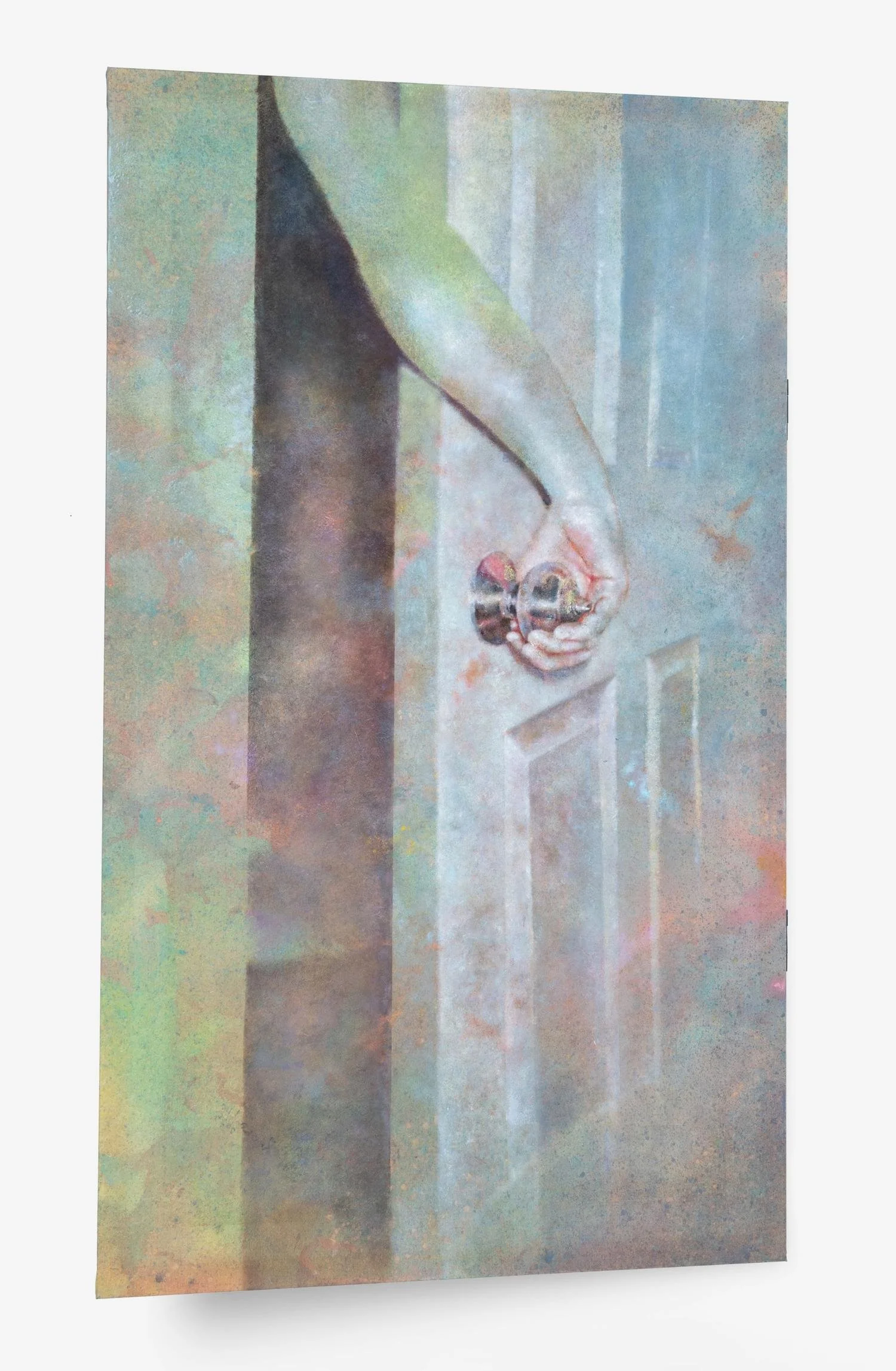
Hinged
Acrylic on silk, aluminum stretcher bars with two vintage hinges attached
119.4 × 68.6 cm
2025
Q: Tell me why you went to the U.S. How did you get there, what were you doing there, and what happened?
I graduated from university in Korea during COVID and was thinking about what to do next. I had taken a gap year in college and tried a lot of different things. I’d always been painting and thought of myself as an artist, but I felt like the opportunities were too limited that way. So I started a startup, spent about a year and a half building a mobile app, tried to start a business, tried other things. None of it worked out, and I realized I wanted to return to making art, to painting.
So I thought, okay, what should I do next? I really wanted to study abroad. I’d grown up abroad as a kid, in China, so going abroad wasn’t a big deal for me. It felt very natural. I wanted to go to Europe, originally London, but at first I thought about Germany because tuition was cheap, so I started learning German. Then I found out every vocabulary word has its own gender and I had to remember all of them. Like, “flower” is a feminine word. I felt like this cultural thing, the gender embedded in the language, was so intense. So I decided I didn’t want to learn German and that I should go somewhere English-speaking. I originally wanted to go to London, but the tuition turned out to be too expensive, so I kept looking for a scholarship program.
Then my cousin, who is a Fulbrighter, told me there was a Fulbright scholarship program I could apply for. So I tried, and it worked out. But it’s a Korean-American government scholarship program, so I had to go to the U.S. That’s when I finally decided, okay, fine, I’ll go to America. I applied to schools and ended up going to Cranbrook on the Fulbright scholarship. The reason I’m back in Korea now is also because of the scholarship. They have a kind of “return home” policy that requires you to go back to your home country for two years, which is why I’m in Korea right now.
Q: What kind of impact did doing your graduate studies in the U.S. have on you? What did you go through, and how did it affect you?
I realized that no matter what kind of creative activity I was doing, everyone saw me first as an Asian artist, an Asian woman artist, a female artist making art. They felt the art itself was important, but who made it was almost equally important. That was the first time I thought, oh, who I am really matters to you. Where I’m from, what experiences I’ve had, where I grew up, my background, all of that matters to you. So I started reflecting on myself.
Because in Korea, and in China too, I never felt like my background was especially unique. China has a lot of ethnic minorities, but the majority is Han Chinese, and in Korea basically everyone is Korean. The spectrum people grow up within can feel quite narrow. Everyone is expected to go through a similar route: elementary school, middle school, high school, college. Whether you’re poor or rich, the education you get isn’t necessarily that different. But in America, that spectrum felt much wider to me. Some people grow up homeless, with barely any education, get into drugs, go crazy, that kind of thing, while other people are the complete opposite, private schools and so on. The spectrum is huge, so who you are and what background you grew up in becomes really important. I started thinking about these things.
Then I started asking, why am I making this kind of work now? Why am I interested in these things? It’s all related to who I am and how I grew up. Before, making art was more directed outward, toward the outside world, toward curiosity about what was out there. But after I moved to America, I felt like my creative practice became more directed toward the inner world. Does that make sense?
The initial motivation was that they saw me as a woman and as Asian. That was the starting point. But then I started thinking, well, who am I, really? I kept reflecting on myself. Growing up in China, what does that mean? Why do I think the way I do? I don’t think the cause and the result are exactly the same thing, you know what I mean? The cause was other people seeing me as a certain kind of person, and that pushed me to start reflecting inward.
Q: So you never really resisted it. You adapted to that environment pretty easily. You got to America, saw that this was how the outside world viewed you, and started adjusting to those external expectations, rather than asking, “Why should I be defined by the way you see me?”
At first I found it kind of fascinating, the fact that they had this expectation of me, this category. I thought it was pretty interesting because in Korea and China there was no such definition. I wanted to tell my own personal story, but back when I was in college in Korea, whenever I wanted to talk about something really personal through painting, people would say, what’s so special about that? Doesn’t everyone do that? Isn’t that basically just keeping a journal? Why do you need to make art about it, why spend money and time on that? So I felt like this very personal, delicate kind of thing just wasn’t considered a big deal in Korea back then. I don’t know if it’s still like that now.
Q: Maybe it’s also that in Asia, if you make something very delicate about your own inner emotional world, people see it as a distinctly feminine kind of expression and think you’re not being profound enough, that you’re not engaging with bigger themes.
And it’s like, who hasn’t had painful experiences? Who doesn’t have trauma? Everyone’s been through something, so what’s so special about you? Why do you get to talk about it? That’s roughly the attitude, you know what I mean?
But in America it was the complete opposite. People cared so much about who I am and about my personal story. Everyone was like, you have trauma, that has to be respected, that’s not to be touched. Or, you have this trauma, oh, I relate to that so much, I have my own trauma too, and that’s why I want to talk more about your work. I’m so interested in your work. That’s when I realized, oh, I actually can make work about these things.
In Korea, the reason I later turned toward more abstract, non-figurative work was because of feedback like, this is too personal, I don’t want to know about this, this is too much, this is too dark, too traumatized. But in America, when I painted myself or a portrait of my mom, the reaction was more like, “Oh, okay, I see you.” So at first I was fascinated by that, the fact that they at least seemed to care about these things.
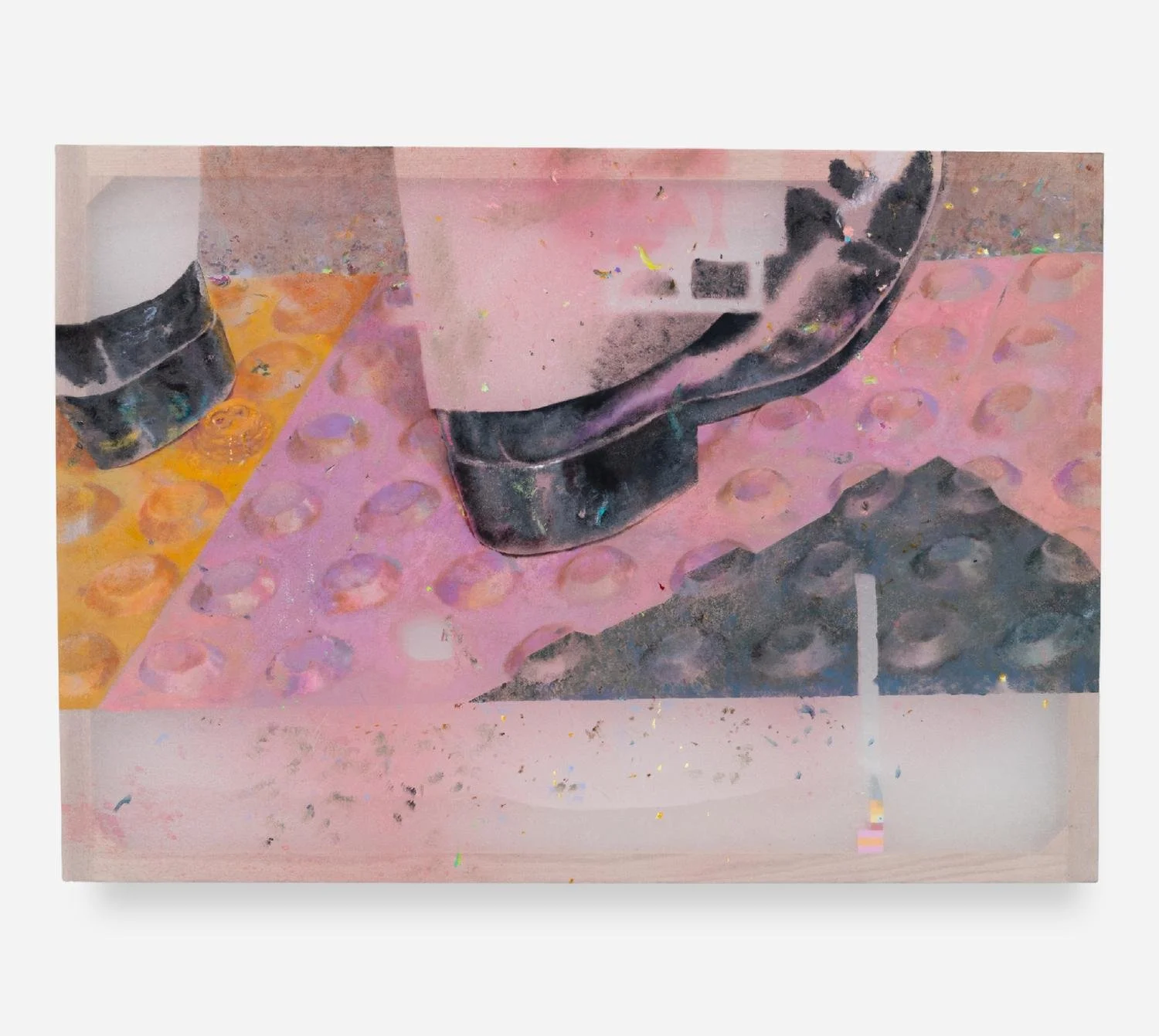
Take Off the Shoes, Please
Acrylic on silk
91.4 × 130 cm
2024
Q: But you’ve been back in Korea for a year now, and the people around you aren’t that same American crowd anymore. Has anything changed on that front?
One really interesting thing is that they don’t see me as a Korean artist anymore. They think of me as an international artist, so whatever I say, the reaction is just, “Oh, okay.”
Q: Why is that? Just because you studied in the U.S.?
Yeah, I think after studying in the U.S., people realized I grew up in China, and suddenly it clicked. Half my life hasn’t actually been in Korea, so I’m not seen as a fully Korean artist. But now, back in the Korean art scene, I feel like people actually care more about personal stories.
Q: Why do you think that changed? You said you were only away for school in the U.S. for two or three years?
I was in the U.S. for three years, then came back. Maybe it’s because before I left Korea, I was in college, inside the academic institution, so the conversations people had with me were different. But now I’m no longer a student, more like…
Q: …An artist who works within the art market?
Yeah, so I think that might be it. I experience it a bit differently now, but I do think there’s definitely been some change since COVID.
Q: Does this connect to the fact that Korean art has suddenly gotten really hot internationally over the past couple of years?
Definitely, definitely related. Here’s how I see it. The Korean market started heating up during COVID. The center of the Asian art world used to be Hong Kong, but because of COVID, that market shifted to Korea quite a bit. It wasn’t some natural, gradual move toward Korea. It was very sudden. And then K-pop, K-whatever, K-food, K-drama, all of it just started to, you know, blast off at once.
It also became more international. Artists, audiences, collectors, they all started thinking from a more international point of view. It wasn’t so inward-looking anymore. It became more like, oh, from an outside perspective, this is how they see us. I think that subtle shift in point of view changed the art scene a little.
Q: So it sounds a little like what you were saying about yourself. The whole Korean art scene had a moment like when you first got to America, discovering this new external gaze and then adjusting how it saw itself.
I feel that a little bit, yeah. Korea has some really unique cultural things. Of course every country has its own unique culture, but people had taken these things for granted for so long that they didn’t think they were special. Then all of a sudden they realized, oh, this could be our own thing, something unique to us. So they started rethinking it and appreciating it more.
I think that’s especially true with things like Korean architecture. After Japanese colonization, the war, and the Korean War, so many buildings and houses were demolished. Afterward, they rebuilt in this Western, modern architectural style. So much of Korea feels new, and its modern history is quite short compared with some other countries. People didn’t really appreciate the older history either, at least that’s how I felt before. But now they’re starting to rethink that too, in the way you just mentioned.
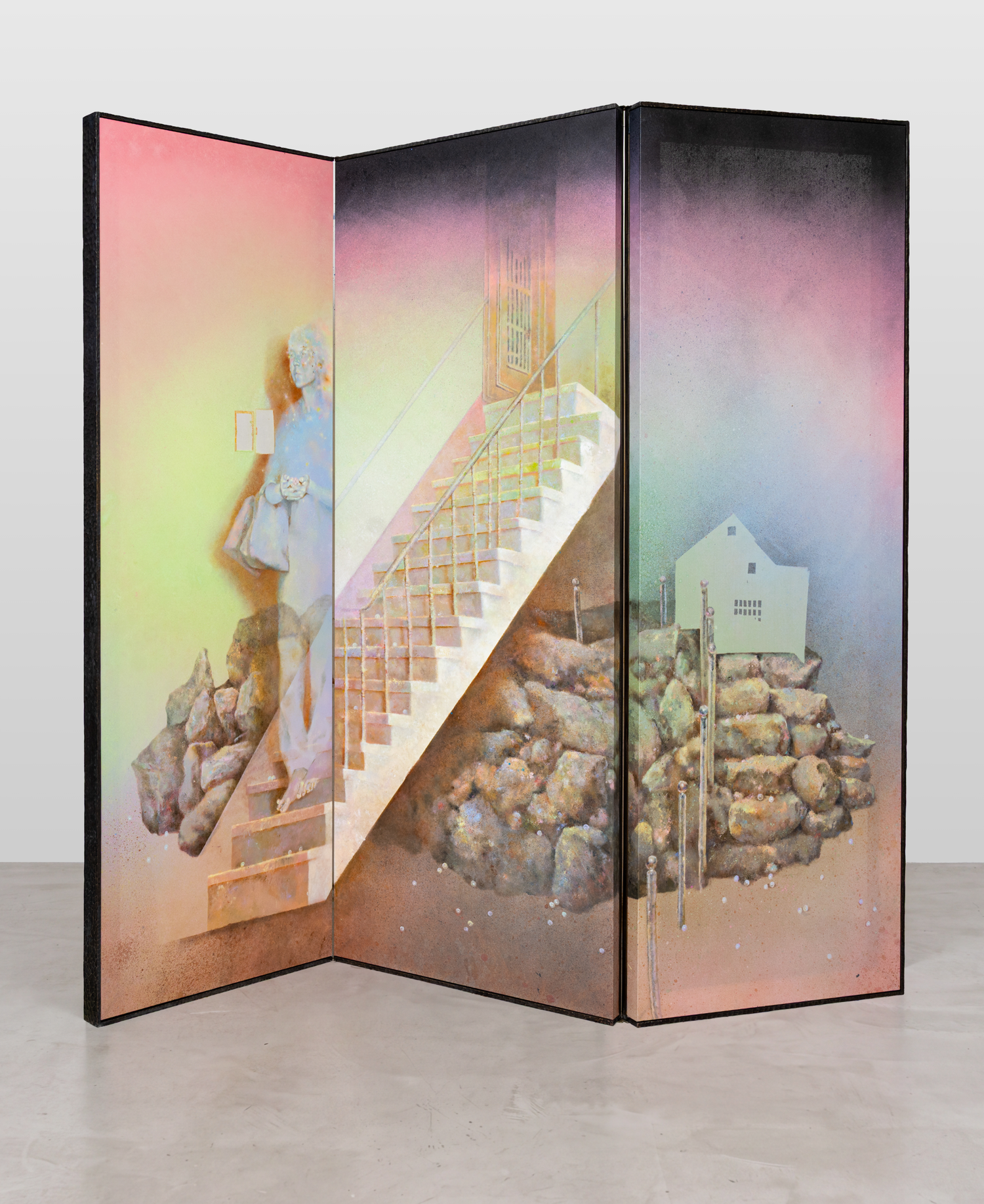
And the Pearls Scattered
Acrylic on silk
170 x 60.5 cm
2026
Q: I think this really does seem connected to COVID. There was this rupture, and along with a broader anti-globalization trend, it felt like a lot of countries started closing their doors. Once they closed off, they turned inward and focused on their own culture, asking, what do we have within our culture? China has had a similar push in recent years to dig into traditional culture, maybe also as a way of building national confidence and pride. Is Korea asking, what’s uniquely ours? Does it feel like some kind of resurgence?
And going back to what you said about more attention in the Asian art market shifting from Hong Kong to Korea because of COVID, do you think that also made people in Korea more aware of this external gaze, especially from the U.S.? Like, suddenly realizing, “Oh, this is how they see us.” And with things like K-pop, K-beauty, and the broader Korean Wave, do you think that growth happened mostly organically, or were there other forces helping to drive it, like government support or Korean conglomerates?
Hmm, I don’t have a very deep understanding of the industry, but I used to be a huge K-pop fan myself. I think at first it happened naturally, and then later, after Blackpink, BTS, Gangnam Style, people realized how powerful it could be. They saw the potential. Then the government started supporting it. Before, it was more like a commercial industry, and now it has become part of the country’s broader cultural identity, like, this could be one of our biggest strengths.
Cultural influence is so powerful. It can change the image of an entire country. Over the past few years, I think people realized, oh, this is a really big strength, and started supporting it heavily.
Q: So with that shift you’re describing, and you happening to catch this moment, it sounds like you’ve also benefited from it. What about the artist friends you knew before you left who stayed in Korea the whole time? Have they benefited from this shift in the art market?
Hmm, I’ve been back in Korea for a year now, and my closest friends, the ones I was closest to in college, all went abroad for grad school, to London, Japan, or the U.S. So I don’t really have artist friends who stayed in Korea the whole time.
Q: Do you see a split there? I know this exists in China too, between returnee artists and homegrown artists who never studied abroad, who grew up entirely in the domestic system, versus a group that went abroad to study and then came back. Do these two groups make different work or think differently?
It does seem a little different, yeah. I don’t want to generalize, but I have this artist friend I really love who has stayed in Korea the whole time. She sells paintings and has her own collectors, but I think if you’re true to yourself and true to your art, the big question isn’t whether you objectify yourself or not. It’s more about whether you’re brave enough to do something new, even if the audience wants you to keep making the same thing over and over. She has this really strong, powerful body of work, but once she decides, okay, I want to move on, she just moves on and does something completely different, something really experimental.
I think a lot of commercially successful artists in America don’t really try to do that. Even I, and I don’t have that big a client base or feel like I’m at that stage yet, already feel this kind of pressure from the market. Collectors and galleries are always telling me, “I want that series,” “I want you to keep the exact same color palette,” “I want more abstract paintings.” So it’s really hard to set your own boundaries and figure out what’s beneficial for you and what isn’t. I think the change before and after you get involved in the commercial side of the art world is really big.
Q: Since we’re on the subject, tell me about your work. How would you describe the body of work you’ve developed now? Visually, I saw some of your work back when we were in school. From what I remember, there was the body and space, and it seems like there have been new developments in your work. How would you describe what you’re painting now, the subject matter, or where the inspiration comes from?
I think it’s kind of what I was just saying. Because I grew up across so many different cultures, I’ve always been relocating myself, so I have this sense of not belonging to one culture or country. I call myself a “wanderer.” I’m always just walking and looking. Oh, what did I find here? Oh, what did I find there?
Every time I change my environment, I get these new impressions or thoughts about why some really practical thing is so different from culture to culture, and why it turned out that way. I start from a very sensory level, like the experience of touching a doorknob, and then I go a little deeper: why people made this kind of thing in the first place, how people make different things in different cultures. So it starts from a really immediate, surface-level experience and then deepens into questions of modern history.
The new body of work I made after relocating to Korea, the one I showed at Frieze, is about the landscapes I encountered there. Last year, when I went back, I suddenly noticed how many mountains Korea has. There’s so much vertical landscape rather than horizontal landscape. In America and China, because the land is so vast, a lot of the landscape feels horizontal. But in Korea, especially in Seoul, so much of it just grows straight up. I found that really interesting, so I made a lot of vertical landscape pieces. I also collected things I noticed while living in Korea, like the wish stones you see when you go hiking. Do you know what I’m talking about?
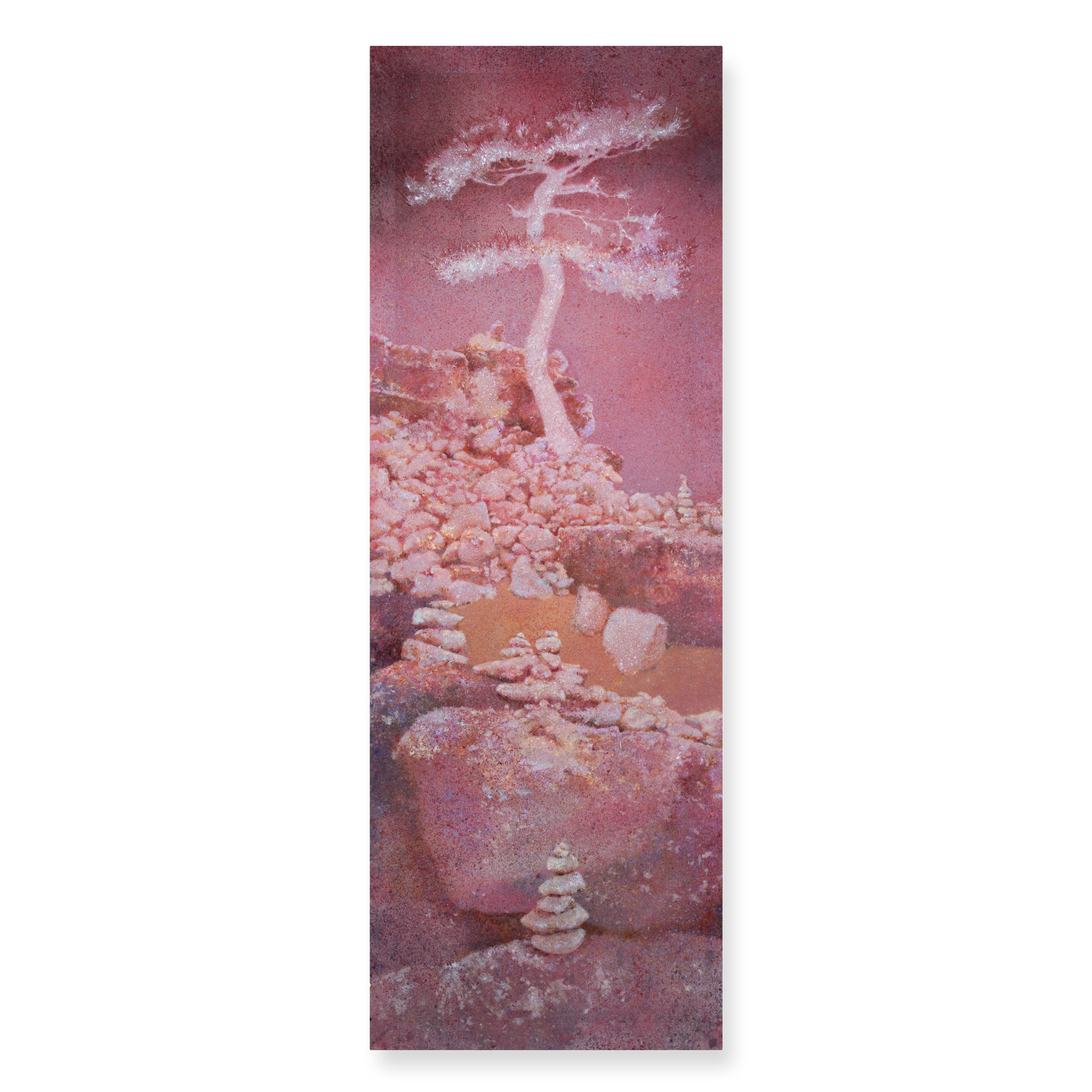
I stayed to count the stones
Acrylic on silk
170 x 60.5 cm
2026
Q: Oh, you mean the ones where people stack the rocks up?
Yeah, it’s really interesting. The funny thing is, I never saw them in China. I think it’s a very Korean thing, connected to shamanism. You see them everywhere when you’re hiking, tons of them. And each one is built up little by little by different people, which is kind of amazing. It’s almost like everyone is relying on each other. You place a stone, try to balance it, make it as tall as possible, and make a wish while you’re doing it, like a wish stone.
I think it’s so condensed, like all these wishes are gathered right there. I find that really interesting. So I made a lot of work about these stones, about how our bodies respond to them and how we interact with them. In the end, it’s still about the environment and how people respond to it. It’s always about, you know, the human body, how we… This is actually really hard for me to articulate in Chinese…
Q: You speak three languages. Which one feels closest to what you’re actually trying to say, the one that best matches how you express yourself?
I think it depends on the time and where I am. It kind of changes. Right now I feel like Korean is the closest, then English, then Chinese, Mandarin. But before, it used to be English first, then Mandarin and Korean.
When I was in the U.S., Chinese ranked ahead of Korean. Right, back then it was English, then Chinese, then Korean. I don’t really know why. I think English and Chinese have a more similar word order. Korean is different. Let’s take “I love you” as an example. In Korean, it’s “사랑해 (saranghae).” There’s no “me” and “you” in it, only “saranghae,” the act of loving itself.
So the word order is completely different, almost the opposite. It leaves out the subject and object. It doesn’t say who loves whom.
Q: So you mean there’s no “I” and “you” in it? It’s just “loving,” and it doesn’t matter who’s loving whom, just that this thing exists?
Right. I find this kind of linguistic phenomenon really interesting. There are quite a few examples like that.
Q: Language shapes how you think, doesn’t it?
It really does, it really does.
Q: And how you think about the world, how you see things, is connected to the language you’re speaking. It’s not just about living in different environments. It goes beyond that.
Right, completely. Because in America, there are so many concepts I never even thought about back in Asia. They just don’t really exist in the same way there. Like the word “agency”: “Do you have agency?” Korean doesn’t really have a direct equivalent for this concept, so it took me a while to understand what people actually meant. There were several words where I’d think, what the hell are they even talking about? And then later I’d realize, oh, this is actually really important.
And people in America say things like “stay hydrated” all the time, but in Korea they don’t really say that. In China, people say “drink more water” as a way of showing care for your health. But in Korea, they don’t really worry about whether you’re drinking water. They worry about whether you’ve eaten. Unless it’s a special situation, like you’re really sick, lying in a hospital bed, your lips are so dry, then they’d say, “Try to drink some water.” But they’d never casually say, “You gotta stay hydrated,” that kind of thing. It’s that kind of subtle difference. I think it’s the same as architecture. Why people speak a certain way and not another, it all comes down to culture.
So I think being yourself while also being able to see objectively how other people see you really matters. You’re the center, but where you’re positioned and what context you’re in also matter. You need to know that. As for language, in America I really do think a little differently because I start these thoughts in English, whereas in Korea I start thinking in Korean. Same with notes. In Korea I take notes in English or Chinese; in China I take notes in English or Korean.
In America, I take notes in Korean because I don’t want people to be able to read them directly. I think the reason I chose to paint instead of becoming a writer is that I don’t want to be too direct.
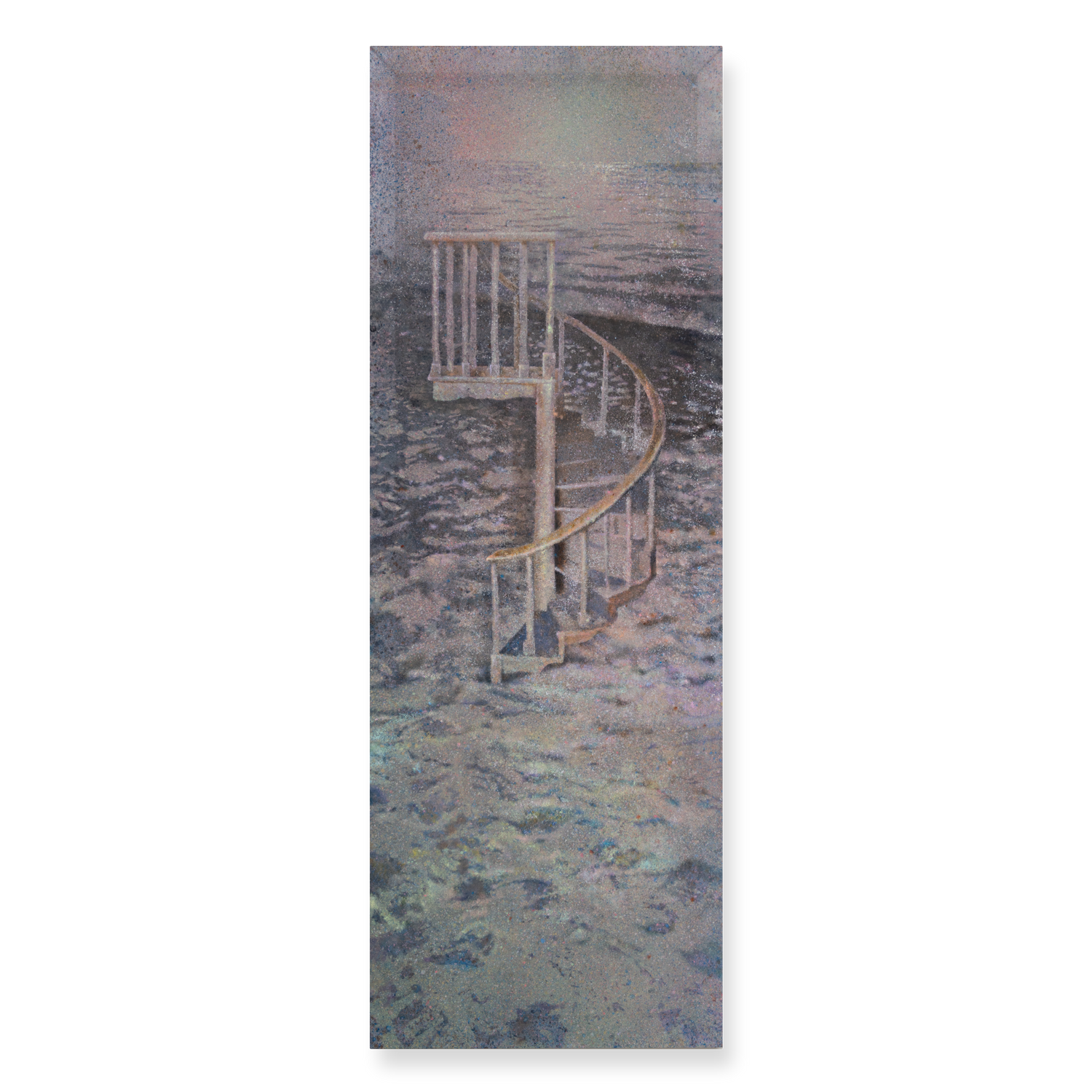
We Climbed Towards the Ceiling
Acrylic on silk
170 x 60.5 cm
2026
Q: You mentioned recently that you’ve become more “Korean” again. Is that connected to speaking more Korean? Maybe someone who doesn’t speak Korean can’t fully understand that particular Korean inner spirit or way of thinking. What kind of mental or spiritual state is that?
Wait, can you rephrase that?
Q: I don’t know how many parts this breaks into, so it might be hard to answer. Hmm… It’s the kind of thing only people who speak that language can understand. Maybe only if you speak the same language and grew up within that linguistic culture can you really get it. So this sense of Korean identity, what exactly is it? It’s definitely not the West’s imagined idea of Korea projected onto you. It’s something Koreans understand among themselves.
Hmm, I think it’s a little related to old sayings and expressions, actually. In China there are four-character idioms and sayings passed down from ancient times. They’re almost embedded in your body. You just naturally understand them and know the context around them. Korea has this thing called “sokdam”, these old sayings or proverbs that get passed down through generations. Growing up, I’d hear some of these sayings and think, wow, that’s just a way of saying something. But as I got older, I realized some of them are actually really true. I don’t know how to explain it.
Q: Like what, for example?
Like… wow, I actually had a realization recently. Let me think for a second. It’s not really a saying, but you remember when we were talking at Cranbrook and you mentioned “qi” [气]? It’s that kind of thing: a single character, a single word, or a four-character idiom. If you’re an artist in Asia, there’s a certain type of person who spends their whole life practicing just one thing, and it becomes something really spiritual, almost like a discipline. You’re so completely devoted that your life practice and your creative practice become the same thing. And that “qi” just runs through everything. That’s how you make the work.
Q: Like it all comes together in one breath. It’s the same in calligraphy. Calligraphy can look like a few careless strokes, but someone who really understands it can tell that one stroke is different from another. It comes from years of practice and, more importantly, from your own state of mind, your character, how you carry yourself. The person and the work become one and the same, and maybe the state of the person matters even more than the state of the work. Only when you yourself are in a good state, grounded, decent, even noble in some way, can whatever comes out when you put brush to paper carry that same energy. Is that what you mean?
I think that’s a very East Asian mentality. In America, I think it’s really hard for people to accept that idea. These are just completely different ways of thinking. The way people understand this kind of discipline, or life, or anything on that spiritual level, is so different. If I’m not wrong, there doesn’t seem to be a specific term for it in English.
Q: You’ve been back for over a year now, you’ve traveled a lot, and you also went back to China again. The last time you were in China was a long time ago, so what did it feel like going back this time?
I grew up in Shenyang, then lived in Beijing for about a year, and I’ve mostly just passed through other cities as a tourist. This time was also just travel. I went to Shanghai for a few days with my cousin. I don’t have a clear before-and-after comparison, so I can’t really say how much things have changed over the years. But watching her reaction to Shanghai, I thought, oh, that’s interesting.
Because you know how the media is, especially Western media. They portray China, or certain Asian countries, in a very specific way, usually pretty negatively. But when you actually go there, it can feel completely different. My cousin grew up in America, so she had certain expectations of China. Then when she actually visited Shanghai, she was so shocked. She was like, “I’ve been fooled my whole life,” something like that.
Q: Might there be another psychological shift too? In America, maybe you feel like a guest, an outsider, or part of a minority, in their eyes, an Asian woman. So you’re not in that central position. But going back to Asia, back to your own country, even going to China, that’s all part of the culture you grew up in. Does it suddenly give you a stronger sense of agency, rather than being on the margins?
I think this might sound a little contradictory, but growing up in China as a Korean, I was always kind of marginalized in a way. Even back in Korea, I was never really the majority or a mainstream kind of person. So I’ve never really felt like I’m some special minority. I just feel like wherever I am, I’m always floating slightly above the ground. I can always go somewhere else, and I can always come back. It’s not that I have to be here, or have to not be here.
I think everyone is like that to some degree. It’s like renting an apartment. A lease is usually one or two years, so until you actually buy a house, you’re always having to move your living space. That experience of relocating gives you this feeling that you don’t quite belong, that you’re not fully part of that place.
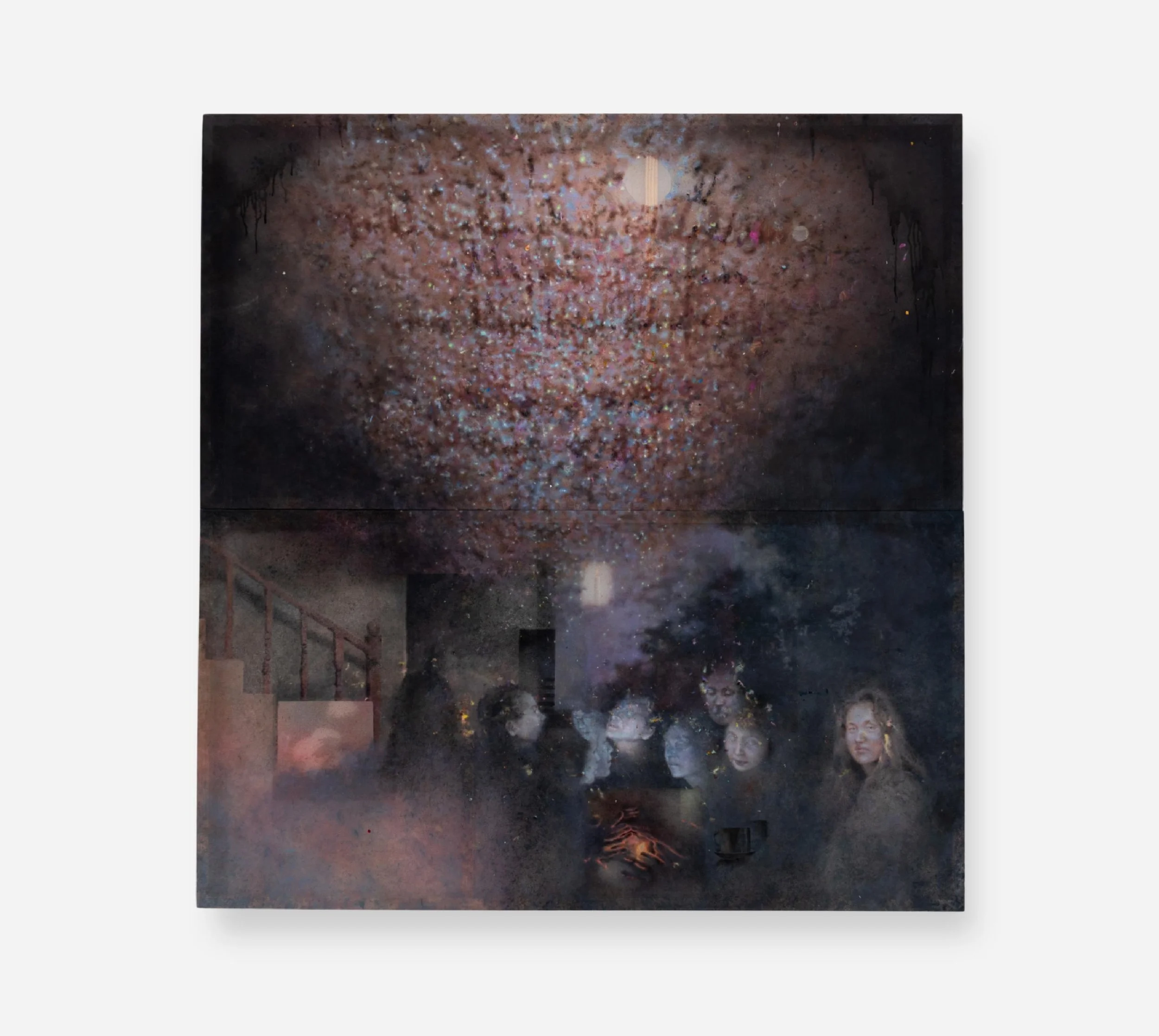
Who Blew Out the Candle?
Acrylic on silk
124.5 x 238.8 cm, 124.5 x 238.8 cm
2024
Q: We’ve talked a lot about this: how you move between different cultures, who you are, and what this sense of “self” really means. It doesn’t seem fixed either. It’s constantly shifting, fluid, and complicated.
I’ve been reading some books recently about the human body, the neural structures of the brain, and the ways our internal organs respond and function. They try to explain, from within the body itself, where this sense of “I,” or consciousness, actually comes from. We’re shaped so much by hormones and all these other internal processes.
So I think it’s incredibly complicated. In the end, though, what matters most is exploring these things from within through making. When you’re creating work, something inside you has to find its way out. You’re in dialogue with yourself. Your thoughts and your energy have to take form. At its core, making art is still a conversation with yourself.
Everything on the outside, the definitions, the branding, the way other people see you, feels separate from that.
When I was in college, I studied micro and macro perspectives in sociology, how we think about the way society is formed. We think about the relationship between us as individuals and society as a whole, and it’s not a simple cause-and-effect relationship. Millions of individual people act in certain ways, and that forms a society. Then that society, in turn, influences how individuals live. Individuals form a social group, and that group shapes the individual again. So there’s always this kind of circulation.
So no one becomes themselves entirely on their own. There are always outside resources and outside influences at play. Being completely “cut off” is almost impossible, especially when you live in a big city.
Q: I think I get what you’re saying. Those inner thoughts are also shaped by the outside environment, so it’s a mutual relationship. But I think the real question is one of degree. How much of it is you completely forgetting yourself and just going along with outside influences, versus your inner self is strong enough that the outside doesn’t affect you as much?
Right. Sometimes you suddenly feel like how other people see you matters so much. And then there are other moments. When I practice yoga, the last part is lying flat on the ground, and there’s this moment when I can suddenly feel my whole bloodstream, the blood circulating all the way from my fingertips to my toes. In that moment, I think, wow, I haven’t felt my body this physically, this directly, in so long. That feeling reminds you how your body functions, how your mind functions, what’s you and what’s not you, even though I think that boundary is actually really blurry.
Our thoughts, our preferences, our biases, all of that is shaped to some extent by what we’ve been taught and by outside influences. But we still have to keep exploring.
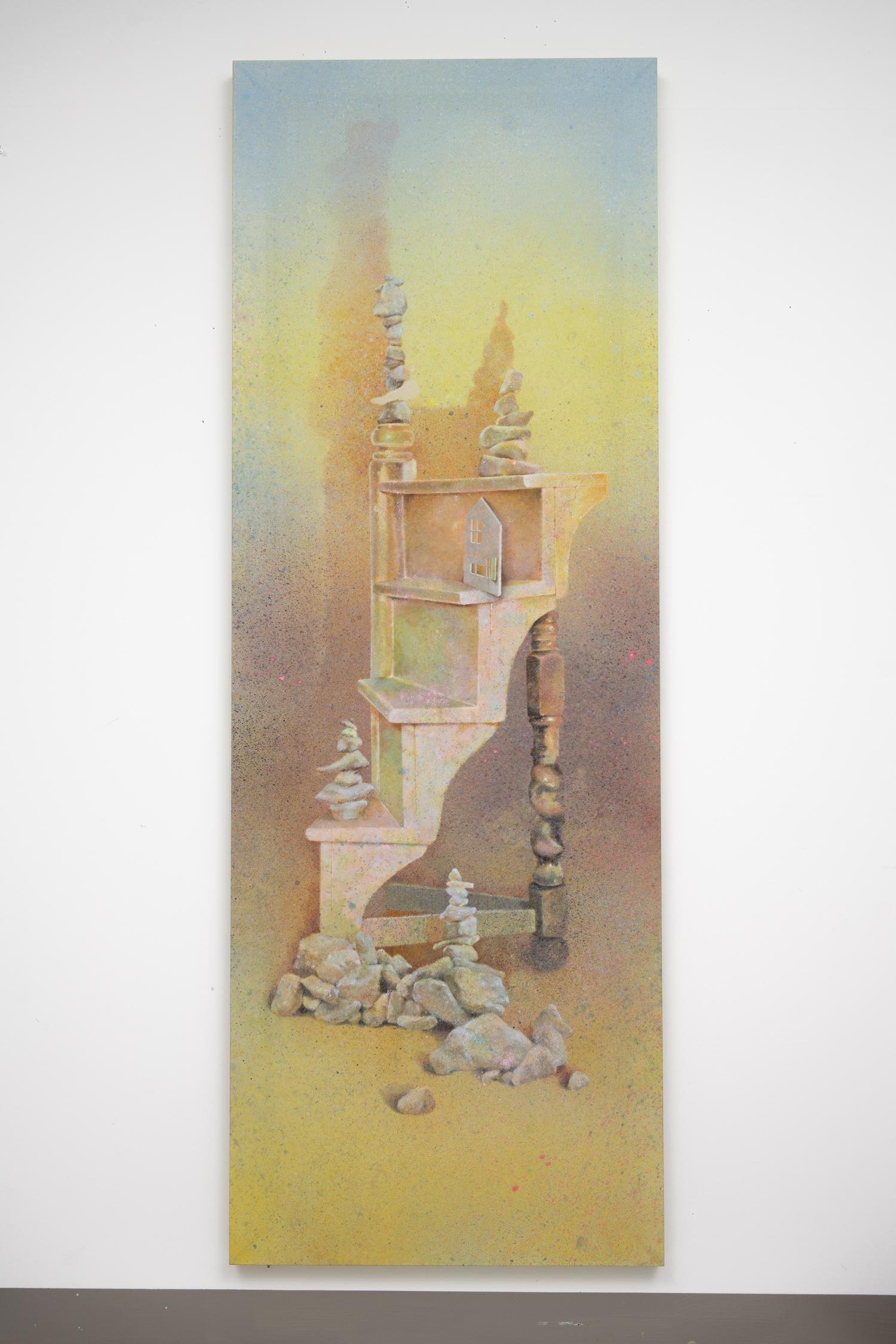
The Inevitability of Falling
Acrylic on silk
170 x 60.5 cm
2026
Interviewed by Chen on September 15, 2026
