Hi.
OpenArt is an independent curatorial art media platform. Publisher of [soft] artist interview magazine.

OpenArt is an independent curatorial art media platform. Publisher of [soft] artist interview magazine.
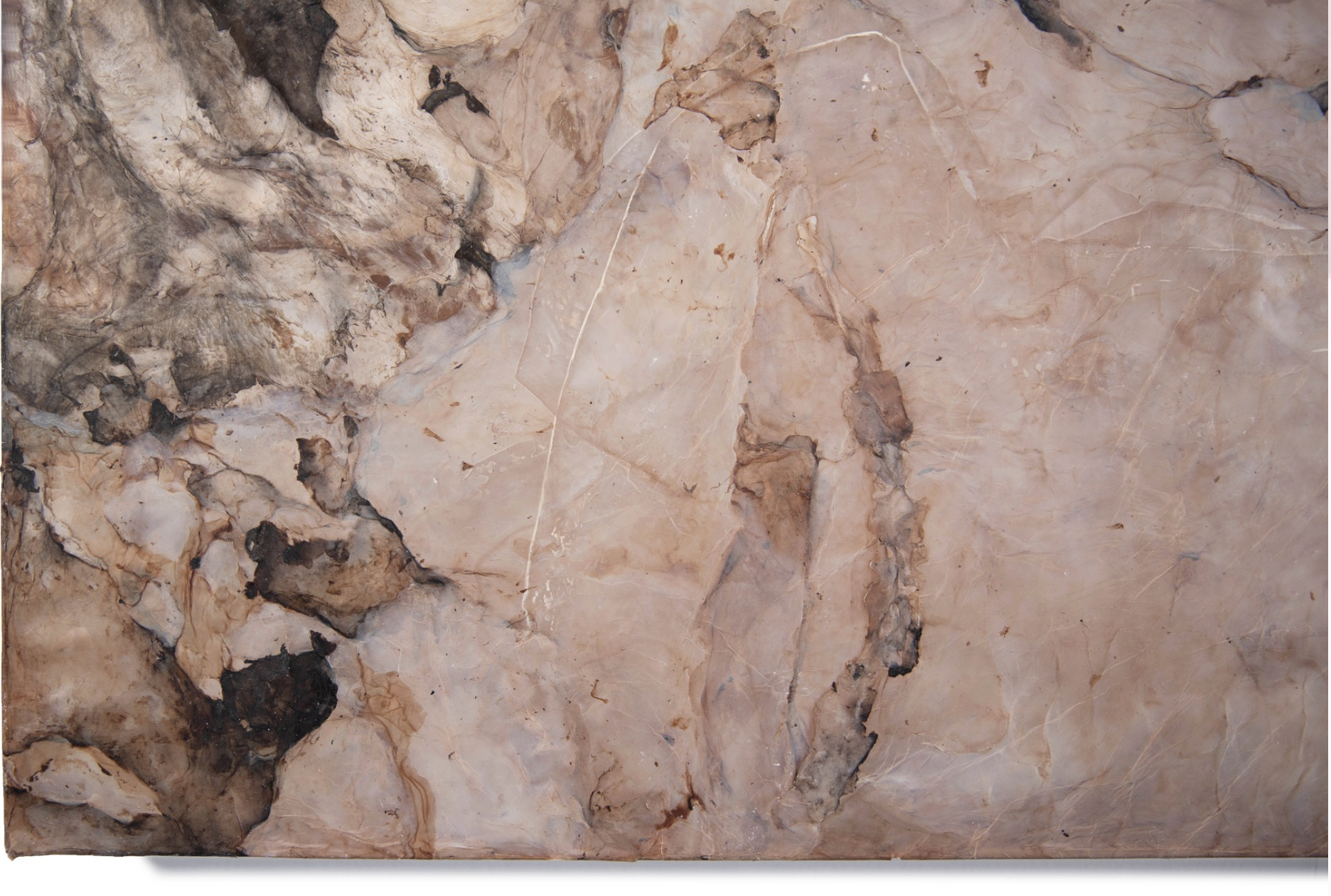
Name: Anna Ting Möller
City: Stockholm
Website: https://www.annatingmoller.com/
Q: For someone who doesn't know you and your practice yet, could you give a brief introduction to yourself and your work?
A: My name is Anna Ting Möller, and I'm based in Stockholm, but I also lived in New York for five years. My practice moves between sculpture, installation and performance.
I think the core of my work is that I've been working with a kombucha culture for years now. It started as a very experimental project, when I was still an undergrad.
I was in China working on another project, a video project at the time, and I kind of very randomly stumbled upon this kombucha culture. It was given to me by a stranger, a woman I stayed with in the countryside of Hunan. And from there, it all kind of started. At the time, I didn't know it was going to be so central to the work, but I took it with me on my travels through China, and then back to Stockholm, where I was based at the time.
Then, very slowly, it entered my art practice. I started making works from this mother culture, and kept going, so that every new work is an offspring of the previous one – an offspring, or a doubling. It kind of means that all the works are in kinship with each other. But it also works as a kind of archival lineage.
Yeah, that's kind of a brief introduction.
Q: How long ago was it that you got your original kombucha?
A: Yeah, that mother culture is from 2015. So it's been a while. I didn't plan for it to go on for so long. And I also didn't really realize how long I'd been with the culture. It's been traveling with me – I've been crossing borders with it, to the US, to other countries. And it's a huge logistical project.
Q: Why kombucha? Why did this thing you stumbled upon, given to you by a stranger, become so important?
A: I mean, there are many reasons. But one thing that's interesting to me is that in the West, it's known as “kombucha”, which is a Japanese term that was imported to the US and to Europe.
And it's kind of a mistranslation, because “kombu” means seaweed, and the culture isn't seaweed – it's bacteria and yeast. I think when something leaves one culture and gets transferred into another, there's always a misunderstanding, or a shift in meaning.
I think that's a very interesting perspective, because there are a lot of parallels to adoption, or to trade goods that move between continents and basically get traded off. And on another level, I think it can also talk about commodity, and how value is created in these objects. For example, kombucha as we know it now became this very trendy drink, so it got really popular. And I think most people who drink kombucha, who buy kombucha, don't know how to make it, and don't know its origin.
And yeah, I think that's also important to the work. But what was your question? Like, why?
Q: Yeah, why kombucha? It sounds like a random encounter – someone gave it to you. How come it became such an important origin point for the work you've continued making for more than ten years?
A: Yeah. I think it's also because it's this very simple thing that people refer to as a "mother", because it's a mother culture, similar to a yeast starter or something like that. So I thought about my connection to "mother", my own self-tracing, looking for some kind of origin, some kind of symbol for what a mother can be. And also me traveling back to China, with China being the motherland – I thought there was a very straightforward symbolism in it that really came to mean a lot to me.
And then, as time passed, I developed this very intense relationship with the culture, and it started to mean much more than just a thing. It's a living thing. But in a way, it also holds all these things I was just talking about.
Q: It seems that in the beginning, you found a connection between the kombucha’s story and your own. But as things developed, it sounds like you and the kombucha began to grow together. Would you say it’s become symbiotic?
A: Yeah, symbiotic. Yes, totally.
You're right. On the surface, it felt like a very good metaphor, but then it grew into something else. And in my art practice, it's this perfect portal for diving into the things I'm interested in, because somehow this living culture holds so many things. For example, for the culture to stay alive, I have to care for it. So I've spent months and years thinking about what care means – care and kinship, disruptive care, and how that's also tied to adoption. But I've also been interested in more stylistic things. It's shiny, and from an aesthetic point of view, I love everything that's shiny, so I've spent time on that too.
I think maybe it's also me being a little lazy, because as an artist, you can do whatever you want – and that's incredibly scary. So for me, building this kind of framework for where I stand has been very comfortable, because I can always come back to that little box and take off from there. I keep returning to this little container I created for myself.
Q: Maintaining the mother culture is one thing, but every time you make work, you also have to grow it. And this growth happens alongside your own growth overtime. I'm curious about this parallel with your personal life, because you've been moving between countries. You moved from Sweden to the US to study, so you've been experiencing growth and change in your external cultural environment yourself. What was that experience of growth like for you over the past few years? And how has it translated into your work?
A: I haven't thought about it that much. But now that you're asking me, what comes to mind is that whenever I have very healthy cultures, it kind of means my life is pretty stable. And whenever I have to leave, I have to move the cultures too.
When I move my home or my studio, or move countries, that's a rupture in their growth. And I feel like it translates very well onto myself as well. But it's not something I'd thought about before, so thank you for asking me this.
I think it's kind of very straightforward. For example, when I moved from Stockholm to New York, something I struggled with was that I couldn't get the cultures to start growing. To get it into the US, I had to chop the mother up into little bits and pieces and put her into six different PET bottles. I put them in my checked luggage and checked it in. And I guess, well, obviously, she didn't like that very much.
When I put her back together and started growing her in my new studio at Columbia, it just didn't work at all. I started to get really stressed about it, because she just didn't want to grow the way she used to in Sweden.
I think we kind of mirror each other, I guess. And it's been very challenging, I have to say, to have this process, especially in New York, because no one has space in New York. To make a project happen, you really have to be creative and think outside the box. It's been such a challenge. And I think that also translates onto my life in New York, as a person new to the city who didn't know the art world. I was struggling, and I could feel the mother was struggling as well. So we're both very happy to be back in Sweden.
But then, you know… you win some, you lose some.
Q: What was that experience like in New York? Now that you're away from it, if you look back, what impact did it have on you?
A: I mean, again, it's something that mirrors. One reason I couldn't make the culture grow was that it kept getting contaminated. New York is such a dirty city – so, so dirty. It's just impossible to keep things clean. So that was a huge challenge.
And for myself, as someone new to New York, there were definitely cultural differences between Sweden and New York. But also little things, like what everybody says about New York – that it's a city that never sleeps, and you're constantly chasing the next thing.
The first thing is that it's too expensive for artists to be there. And the next thing is that it moves so fast. For a while it's okay, because it's also fun. But after a while, you get really worn out, and it's hard to find time to care for yourself. And for me, having to care for myself and for my mother culture, that's a lot of time.
Q: So you're much happier now that you're back in Stockholm?
A: I think the pace here is good for me. I was a little nervous about coming back to a different pace, but I think it's very good.
It's good for the creative process, too. In New York, I was constantly stressed. There was always some kind of stress – either financial stress, or stress from juggling too many jobs at the same time. And all these things kind of make you less creative, in a way. But on the other hand, in New York I met the most creative people I've ever met, because the people who can make it work there are so creative with the little they have. So that's extremely inspiring, too.
Q: Can you talk about what's your current situation in Stockholm? Why did you go back?
A: I moved back to Stockholm in October, and I got a fellowship at Konstakademien here in the city. I have a studio for a year, which comes with a stipend, leading up to my first institutional solo show in Sweden – or actually, ever, because I haven't had an institutional solo show before.
So it's really exciting. But I'm also definitely nervous, because I want to get it right. But what does that even mean?
Q: Yeah, because there's so much unknown – maybe you don't even know what kind of work you'll make in the end. But do you think it still be something related to the kombucha?
A: Yes, the kombucha has a central part in this work. And the other day, when I was walking in the city, I thought, what if this is my last kombucha piece for a while?
Because, you know, I've been doing this for so long. Maybe I'll allow myself to do something other than this after this project. We'll see. I still have a year, or almost a year, to work on it.
It was just something that got into my orbit. But I'm excited for the show. It's going to be an installation, and I'm working with two dancers and a musician – fingers crossed, because it all depends on budgets and things we're still waiting on.
When I was at the MacDowell residency, after Anderson Ranch, I met this musician. She's from Beijing, but she lives in Tennessee, and she's also going to spend a few months in Berlin now. We worked together while we were there, and she's amazing – her music is really cool. So hopefully she can come. And if everything falls into place, hopefully I can also do a performance on the opening day, and maybe the closing day.
Q: Can you talk about how you usually develop a work, from beginning to finish?
A: I have the broad strokes. There's a vision, but everything is very blurry, and as time goes by, things will get a little clearer.
But I should be honest: I don't know exactly what it will look like. I know some of the frameworks.
And in terms of what it means, I think I've figured that out, because I've been working on this project for so long. Basically, because I keep working with this kombucha culture, everything is part of the same project. It's just different presentations – an extension of my previous project.
Q: You’re now working towards an institutional show, which I imagine comes with a certain amount of pressure and expectation. You may even have had to submit a proposal at the start, outlining what you planned to make. That’s one mode of making. But there are also times that are completely unstructured, when you can work on your own time and at your own pace. How does an idea usually begin for you? And does that process differ between these two modes?
A: I need to get fixated on something. And it often comes at very random times – often when I'm in bed trying to sleep. I have this weird thought and then I can't stop thinking about it. Or I'm on the bus, or waiting for the bus, and then it kind of comes to me.
I haven't had that yet for this project. I've had a lot of sleepless nights, but nothing that feels like anything I can use. I don't really know how it works. I don't have a structure for how an idea gets formed – I wish I had, because life would be much easier. But for this project, because I have time, I'm trying not to force anything.
In New York, for example, where time is such a luxury, I was just working through idea after idea instead of resting – just forcing things out of me. Which I think is good too. I feel like as an artist, you need both, because sometimes it's good to just get things out. At least for me, I can get very stuck in my head. But talking to other people also helps a lot, verbalizing things. Talking to you today is really good, because it helps me move forward.
Q: So you're kind of just waiting for that moment to come to you?
A: No, that doesn't sound right either. Not really. I have to say, I'm trying a lot of ideas, and a lot of them just fail, or I never do anything with them. For example, I have days when I just draw, and I don't really know where it's going to end up. Maybe I'll come back to that drawing three years later, or maybe I'll never look at it again.
I guess I'm just not a very structured artist. Through the different cohorts I've been in, I've seen some artists who are so structured with their lives, with their art. I wish I were like that, and I'm not. I hate myself for this, but I write a lot of things on notes like this, and then they just end up everywhere.
Q: I think it's a beautiful thing, not a negative thing, that you have to bear this uncertainty and the unknown – not knowing when it'll come, or whether you'll feel something strong enough to make work from. Usually, those feelings and thoughts only come to you in your idle time, not your productive time.
It's this breathing time – probably just like how a culture grows. It needs air, it needs time, it needs the right temperature. I feel like when people look at an artist's work, their projects, their résumé, they usually only look at the end product, the result. But how did it grow into that result?
A: You're absolutely right. But I also have to say that over the years I've been showing work, because my process is so unpredictable, and a lot of things often happen beyond my control – at the end, or throughout the whole thing – I often feel like I'm showing unfinished work. And I'm kind of curious to see how this one will feel: whether that's just the way I make work, or whether this will feel more finished, because I've never had this much time to make a piece before. So it feels a little strange.
Q: So how does it feel to show unfinished work? Or is that just part of the concept? And earlier you mentioned the word "fail" – some work that fails. How do you define failure? What's success?
A: I think when I've gone through phases where I've just been making things that don't go anywhere, it does feel like failure. But I also know, because I've been doing this for so long, that I have to go through these phases to get somewhere. And sometimes, when I'm being hard on myself, I think, oh, I could have just taken the shortcut and I would have ended up here anyway. But that's the beauty of art – it doesn't work like that. You can't just take a shortcut to make a piece.
The road is going to be bumpy, and it's going to go to different places, but where you end up is shaped by all the little detours you've taken through the project. Even if that's extremely frustrating, I know now that's how things work for me, because somehow it's impossible not to get there. And I have to say, I often end up not exactly where I started, but very close to my first thought. I just have to try my way through, figure other things out, and then come back to almost where I started.
It's often like that.
Q: I think that's very honest and beautiful. From another perspective, from your observation of how people receive your work: do you find people react to your work differently in the US versus in Sweden?
A: I think in the US, people just aren't shy about saying things. Even when it's not exactly what I'd like to hear, I get more opinions from a US audience. They'll tell me what they see, how they feel, things like that.
But when I show work in Sweden – or when I did show work in Sweden – it's a less vocal audience. Someone might look at it, but then I don't know if they took it in. I think it's a cultural thing. Swedes are not as outgoing.
Q: But does that mean they don't have opinions? Or do they just keep them to themselves?
A: I feel like in the US, people will share no matter what. It's an oversharing culture – good and bad, it's fine.
Actually, I really miss it already, and I didn't think I would. For example, in the studio building I'm in now, nobody talks to each other. I think it's the culture. It's not that anyone is trying to be rude, but I just realized I've gotten so Americanized or something. For the first couple of days, I was like, oh, everybody hates me here. And then I was like, oh no, it's because I'm in Sweden, and no one will talk to you – that's just how it is. I'd totally forgotten about this.
But the thing with America is also that just because someone says something doesn't mean they actually think it. So that's hard too. I feel like both cultures are hard.
Q: But in that scenario, it only happens when they say nice things, right? If they say bad things, they don't secretly mean nice things.
A: Yeah, that's true. But I have to say, in New York people aren't afraid to tell you, for example, if they're repulsed by the work – because the visuals are pretty gory sometimes. I can understand that it evokes feelings that aren't comfortable. People in Sweden tell me this too sometimes, but not as often as a US audience.
Q: Is it because Swedes are more attuned to torture – you know, because of Stockholm Syndrome? [laughs]
A: Yeah, maybe – it's much closer to their reality. I don't know.
No, I think – I don't want to say mean things about Swedes, but maybe it's about the arts, academia and the humanities in general. Sweden isn't like France or Germany. There isn't a long tradition of – no, this sounds so elitist. But I feel like it wasn't that long ago that Sweden was just farmers. And I think that's kind of a reason why Swedes – "introverted" is the wrong word – but why they hold back so much. France and England, for example, have such a long history of culture. I mean, culture for the aristocrats – but Sweden doesn't really have aristocrats on that level.
Q: You've talked about this a bit already, but can you talk about your observations of the art scene in the US, particularly in New York, versus Stockholm? How are they different? And how is the support system different?
A: I think Swedish artists rely a lot on state funding. But that doesn't mean it's easy to get, and each year it gets harder to get through the selection process. They're also constantly cutting culture from the yearly budget, so you can really feel that the arts here aren't as fertile as they were before. But it's really nice that the state can support this many artists.
And in New York, the way I understand it – and I also have to say, I don't really understand the New York art scene…
Q: Even after being there for five years?
A: No, not really. I still feel like an outsider there. But from my understanding, they have this whole system of private organizations – sometimes for-profit, sometimes non-profit – that support the arts.
We don't have that system in Sweden at all, because we didn't need it; the state would be there to hand out the money. But in the US, because there's no state support for the arts, it kind of had to work out like this, which means you have all this philanthropy supporting the arts. But I also understand there's always a financial interest in it as well, because if you support the arts through philanthropy, you can deduct it from your taxes. So, you know…
Q: So you don't have rich people supporting the art system over there?
A: I think in general, Sweden doesn't have that history of patronage here. But in New York, I bumped into people now and then who were proud of being patrons. Someone even offered to be my patron once, but it felt like the kind of relationship I wasn't interested in.
Q: Do you see the art produced by these two different systems as being different?
A: I want to say that a state funding system should be the better system. If I had to choose, I think that's the right way to do it. But I can also see ways it doesn't work. For example, there's still gatekeeping in the Swedish system. You still have to come from certain schools – if you don't go to the right schools, it's really hard to get into the funding systems.
And similar to New York, it's often the same people who get the big grants or the big shows. So in that way, they're quite similar. The difference is just where the money comes from – whether it comes from taxes or from one rich family.
Q: Because I feel like the usual impression is that art in Europe, because there's more state funding, is less commercial or commodified, whereas in the US so much relies on the gallery system. When you make a work, you're already thinking about how to get it into a gallery; there's a price tag attached. Maybe it's more of an object, less of a concept.
A: Yeah, yeah, absolutely. But I also have to say, the amount of experimental art, weird art, crazy art I've seen in New York is on a different level than what I've seen in Sweden – which should be the other way around, when you think about it. But I think it also has to do with the fact that in New York, you have to be a little crazy to be in the arts.
Being an artist in Sweden is more kind of… normie than in New York, I think. Though I can only compare to New York; I haven't really been an artist anywhere else. But for example – and this is so great – here, if you're an artist and you're struggling, you can still have a child, because the system will support you. I see it with my friends. In New York, that's impossible. You can't even have a child if you're a successful artist.
So I think it kind of attracts – not different kinds of artists, but it's a little different. And it's kind of beautiful: you can be a pretty shitty artist, or an unsuccessful artist, and you can still do it.
Q: Do you mean in New York or in Sweden?
A: In Sweden. But then I have to say, I'm very conflicted – I can feel it as I talk to you – because in New York there are so many ways to make money. That's the real downside in Sweden: everything is so organized here.
You can't just take a job for the day. You have to go through the whole process – you have to send your papers through the police system, and nothing is fast. So it's really hard to make fast money, which is how I kind of survived in New York. Some months I didn't have my rent, so I would just take jobs here and there.
That works in artists' favor, in that way. But here it's really hard to get an extra job, because everything is so bureaucratic.
Q: The New York hustle versus…
A: Yeah, the New York hustle doesn't work here. Because of the cultural differences, being very do-it-yourself doesn't really translate very well.
Q: I think it has to do with the larger societal structure, context and history. And maybe there's more weird art in New York also because you have to be extra to stand out a little.
A: Yeah, I also think maybe artists who are active in New York come from different backgrounds. I think that's the downside of Sweden – it's such a monoculture. The art will look similar, because everyone goes to the same schools, has the same professors, looks at the same art.
In New York, you have all these different channels; so many more things come into one's consciousness, or unconsciousness. I think that's a huge difference. And it's also something I miss when I'm here.
Q: You can't have both worlds.
A: You can't have both.
Q: Earlier you also mentioned that in New York, people are always chasing after something. And I guess they keep passionately chasing because they have the hope, or the illusion, that one day they'll get there. But you said you're not sure that will ever happen. How did you come to that conclusion, that observation?
A: I have no idea…[laugh]
Q: …Because the chasing part is obvious, but you're not sure they'll ever get there. Why are you pessimistic about it?
A: Why am I pessimistic about it? I think maybe I was talking about myself, because being there, I feel like – myself included – I'm constantly chasing. But maybe the thing is the chasing itself, because when you arrive where you thought you wanted to be, that isn't it. It's the process that matters.
I think I read about a psychologist who was saying that we're more excited before we actually buy something – our psyche is more satisfied before we buy the product. The moment we've bought it isn't the satisfying moment, because the satisfying moment was everything leading up to it.
And I feel like it's something similar here. It's the chase, and that's the thrill, I guess.
Q: But what was it that you were chasing when you were there? Ambition, fame, recognition?
A: No, I feel like maybe I thought so. But more through my journey, I feel like I've constantly been chasing who I am, because I don't know anything about my family history. And because of that, I can be anything.
And that's something that's destabilizing, but it's also something that creates opportunities – it's like a double-edged sword. And I think that's why I always… I don't feel at home here, so I'm chasing something else. I go to China, and there I'm chasing too. And then I go to the US and continue chasing. But I guess what I'm chasing is probably already in me.
Q: Do you still find yourself chasing, now that you're back in Sweden?
A: I think so, yeah.
Q: Is it the same or different? We touched on it a little when talking about how different environments make you see yourself a bit differently. Perhaps in New York you feel more ambitious, and back in Sweden you feel like, oh, it's okay to calm down and take a slower rhythm. And maybe when you go to China, you feel something different again.
So your sense of who you are, and what you can be, seems to be shaped by the container you're in. How does your sense of yourself differ across those three environments?
A: Yes, I think each environment functions differently. I haven't thought about it much now that I'm back in Sweden. But after maybe two years in New York, I was kind of struggling a little.
And then I realized, okay, I can't really be funny in English – how language captures you. I'm much better at humor in Swedish. But in many ways, I feel much freer writing in English, which kind of surprised me, because I never liked writing in Swedish.
I felt like it wasn't my medium, all these things. And then I came to the program at Columbia University, where I had to write essays in English at a level I was not comfortable with at all. At first, I was failing. But after not passing twice, I was like, okay, I'm just going to do it and not care whether it works or not.
And somehow I felt a kind of freedom in writing that I'd never felt in Swedish. I guess because Swedish is my first language, I'm supposed to be much more perfect with it. English just lets me be, because it's not my first language – if I make mistakes, I can always blame it on that.
So in many ways, being between different cultures is hard and challenging, but you just have to find the little quirks that make it… Yeah, you just have to find – it sounds really cheesy – the silver lining. This is what's challenging, but then you can take advantage of all these little perks. And after a while you kind of find them, but it takes time.
With China, it's really different, because there I'm basically not speaking at all. It's just body language, and taking everything in through sight and sound that doesn't mean anything to me. And then, how do you communicate?
That's very challenging and hard, but somehow I get through it – I just have to do it. And I keep going back, and I do this to myself over and over again. I guess because there's also a kind of obsession with it.
Q: Yeah, I find that interesting, because you mentioned how your ability or inability with language shapes how you interact with a cultural environment. But also, when you're not speaking – when you're just a silent body going to those different places – how does the body sense belonging? You were born in China, and you grew up in an environment in Sweden without many Chinese people around. What is that physical feeling like?
Then you go to New York, a city of immigrants from all different backgrounds. So suddenly your experience doesn't stand out in the same way, and maybe that's comforting, because everyone else has very complex stories too. So maybe there's belonging there.
And then when you go back to China, even though you don't speak the language well, you look the same as the people around you. It feels like it's the same you, but in different environments. I just find that interaction with the world around you so interesting. I don't know what it feels like for you.
A: No, I think you said it really well. Yes. And when I was younger, that was something I saw as a disadvantage: I'm not at home anywhere. But now I'm trying to find comfort in it, or see it as an advantage. I know there are many disadvantages to this, but I'm trying not to be as angry.
There was a time when I was very upset about my situation, about things I couldn't control – like, why did this happen to me, blah, blah, all those things. And I think it's okay to be upset about things. But for me, at least, I guess that's when art became something I could rely on.
And now I realize I will rely on it forever. I feel like if I didn't have art, I don't think I would have turned it into something I can feel comforted by. I think I would have gotten stuck in a darker place. So in that way, I'm very happy that I found art.
Q: Yeah – an outlet, a way to process all these feelings and emotions. So I guess my last question, and maybe you won't know how to answer it: can you imagine doing anything other than being an artist?
A: Um, I was going to say this earlier, when you were talking about being somewhere and not being able to speak. I love dancers. If I could ever choose my path again, I would want to be a dancer, because I think it's the most beautiful way to communicate with your body. You don't use language – and language has created this very hierarchical way of seeing the world.
With movement and dance, I think there's a pureness to it. Though that's also because I'm not a dancer, so I don't know – there are a lot of structures and hierarchies in the dance world too.
But I think whenever I cry seeing art – it doesn't happen very often – but when I do, it's always when there's a dancer in the work. And this is also why I'm extremely thankful for this fellowship year, because it allows me to work with dancers.
So even though I'm not going to dance myself – I'm not a dancer – I can still experience it through someone else, in a different way than just being in the audience. So yeah, that's my answer. If I couldn't do exactly what I'm doing, I would want to be a dancer.
Q: I have to ask one more question about artist residencies, because you've done so many recently. Can you talk about what you gain from going to so many residencies?
A: I think what you take with you from residencies – the real value – is the relationships. The people. Being in the same place at the same time, but coming from different paths, different cities. It's beautiful – it's like a crossroads where everybody meets, and then you continue on your path.
I felt like that when we met at Anderson Ranch Residency, because you don't know what people have been going through just before they came, and then all of a sudden we're there together. That was really beautiful. And the other one I did in the US recently was MacDowell.
That was two months, and it was extremely… I don't have words for it. Friends who've done it before have been saying it's life-changing, all these things. It's amazing, and I agree. It's just insane – how those weeks felt, and how they'll stay in my body.
And the people you meet – because you don't all come at the same time. Everybody arrives on a different date and leaves on a different date. Some people stay longer, some shorter. So you don't really know who your cohort will be, because it shifts every week. And that makes it even more like… you can really feel that everyone is on their own path. You just kind of touch each other, and then you move away again. I would highly recommend that anyone apply to MacDowell. It's been around for so long – it's the oldest one in the US – and I feel like they've really figured out what artists need to become the best versions of themselves at that time. I got really attached to a lot of people, even though I only knew some of them very briefly.
Somehow the place is magical, and you're so well taken care of while you're there. For me, it opened a lot of doors – it gave me the guts to try new things, and to be in proximity with so many other artists. It influenced my work without me knowing it. I mean, I feel that way whenever I'm at any residency, but especially there, because there's no pressure to make anything. So everyone is very, very relaxed and also very open. I feel like I'm still processing my time there.
Q: And did you make work there?
A: I did. I started working on this project while I was at MacDowell. Unlike Anderson, at MacDowell you get your own little cabin.
So you can decide everything – the only thing that's mandatory is dinner. They serve breakfast, and your lunch gets delivered to your cabin, but dinner is when you go to the main house.
So you can be totally isolated if you want. Or, you know, a lot of people end up doing a lot of things together during the day, which is very fun, and kind of important too – not just being on your own.
And the nature is beautiful. Anderson is beautiful because of the mountains; MacDowell is really beautiful because of the lakes and forests. You're kind of cut off from the rest of the world.
You don't have Wi-Fi, which is really good. You have Wi-Fi in the library, so if you need to do something you can, but that's a very nice thing about it. And the only thing they ask of you – though you don't really have to – is to present one day.
Everyone takes one night to present their work, and that's the highlight of the week. It's not every day, either – maybe two days a week or so, people present.
It's not just fine artists; there are also composers, dancers, choreographers, a lot of writers and journalists. So it's all kinds of fields. For example, something that really stayed with me was a composer – his name is Huang Ruo, he's apparently pretty famous in China – who was working very intensely. On his last day, I think, he presented what he'd been working on while he was there. He's an opera composer, and he sang one of his arias for us while also showing us his – I don't know what it's called – all the notes for all the different instruments he was composing for.
And I just got so emotional seeing that. Other musicians would present their pieces, and someone did a reading of their play. It's just a very well-structured situation.
And I think the key is that it's really structured, but they ask nothing of the artists. You get everything delivered to your door. Yeah, I don't know what else to say.
Q: Sounds like a utopian situation where…
A: And the thing is, I was so sad to leave. It is a paradise situation, but you also know that you have to leave. That's why it's paradise. You can't stay there forever.
Q: I think maybe part of the residency is that you're in this utopian artist village together with other artists. When you go back to real life, maybe it's just you by yourself in the studio, and you don't get to interact with other artists on that kind of intimate but also spontaneous level. The environment is created so that you're more willing to talk and share, instead of seeing others as competitors – because there's also competition.
A: And all the normal chores you have to do during the week – cleaning your house, doing grocery runs, all these things – you don't have to do them. So that frees up so much of your time.
Q: That would be nice. I wish we could live like that forever.
Interviewed by Chen on October 20, 2026
